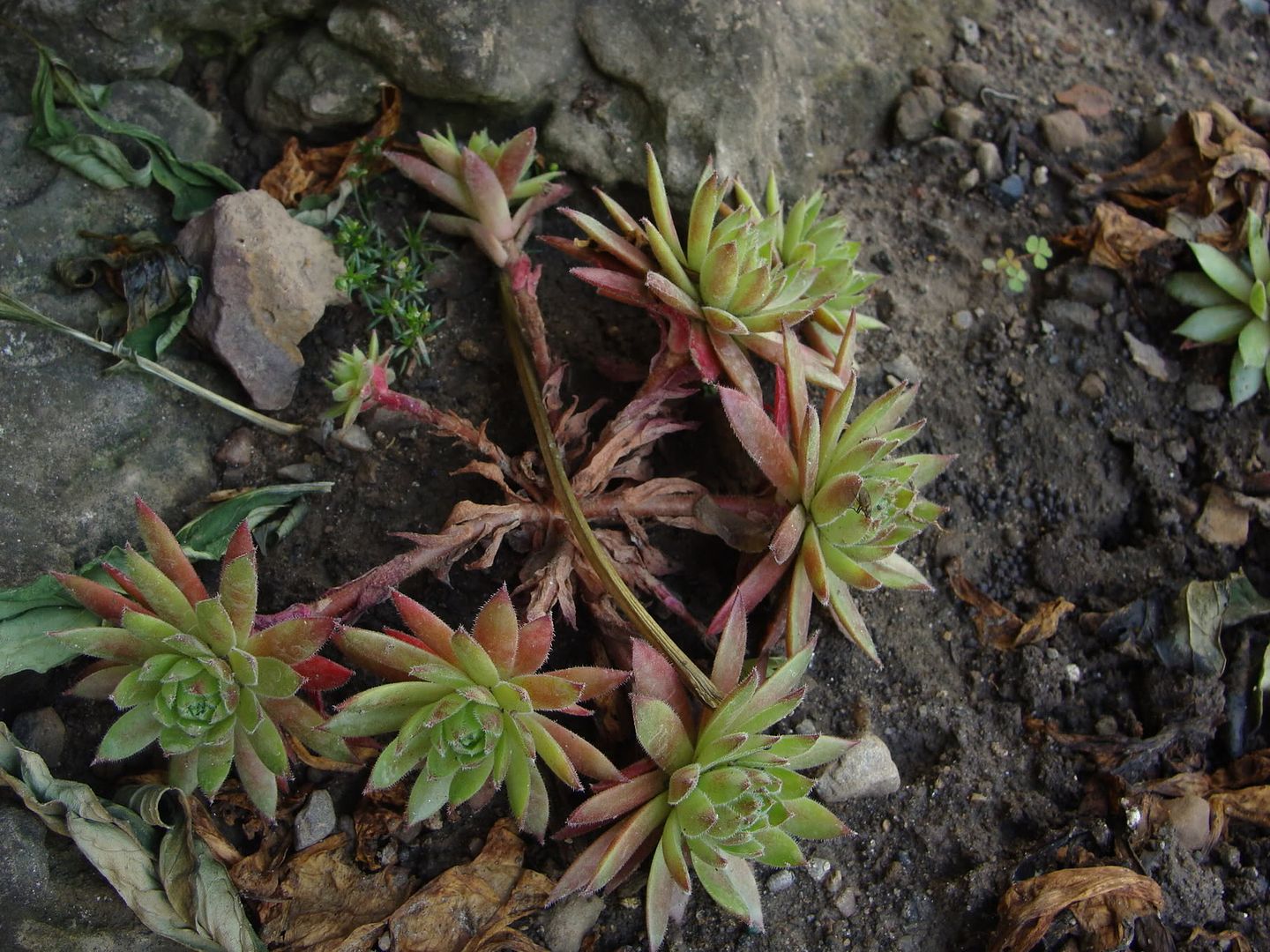
Sempervivums usually reach their full size by around July, and start flowering over the summer if they are mature enough. So far, most of them have produced many offsets. Here's the latest blog from 5 weeks ago. http://stevespeonygarden.blogspot.com/2012/05/sempervivums-hens-and-chicks-waking-up.html#more
One way I have figured out how to prevent people from stepping on them or deer from eating them is to place rocks around these plants.
This is a very unusual one as it split itself into 9 large offsets instead of simply producing them.
Search This Blog
Showing posts with label spreading. Show all posts
Saturday, June 9, 2012
Saturday, June 2, 2012
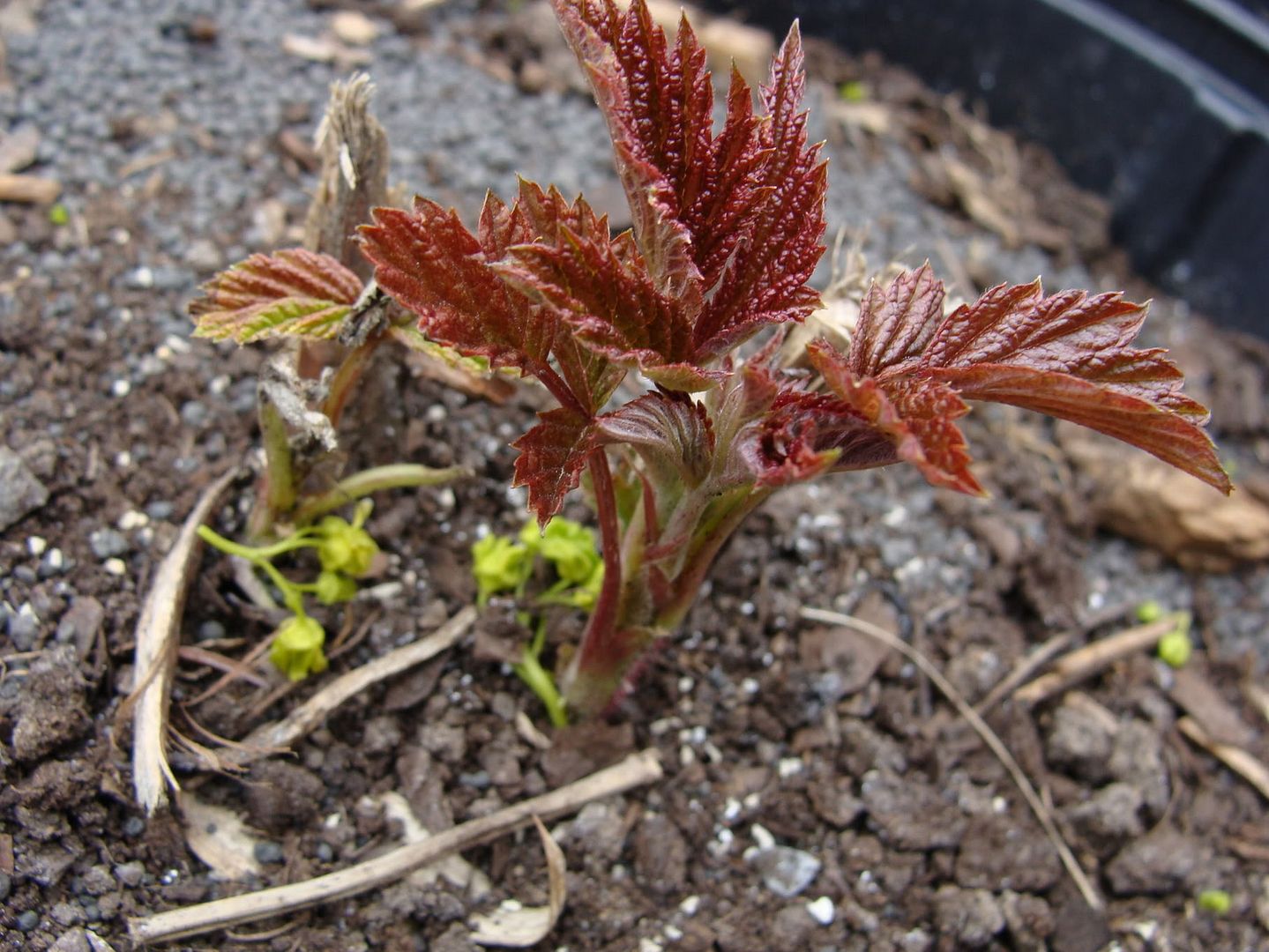
Thornless raspberry growth progression
2 months ago, I purchased 5 bare root thornless raspberry plants, and they have really taken off over a 2 month span. Since they are starting to fill out their pots, I have had to start planting them in the ground. This blog shows their growth progression over about 2 months. The sprouts that emerge this year should bear fruit the following year so I need to get them in the ground to make sure they have plenty of room to spread and make new shoots.
10 April
10 April
Thursday, May 17, 2012
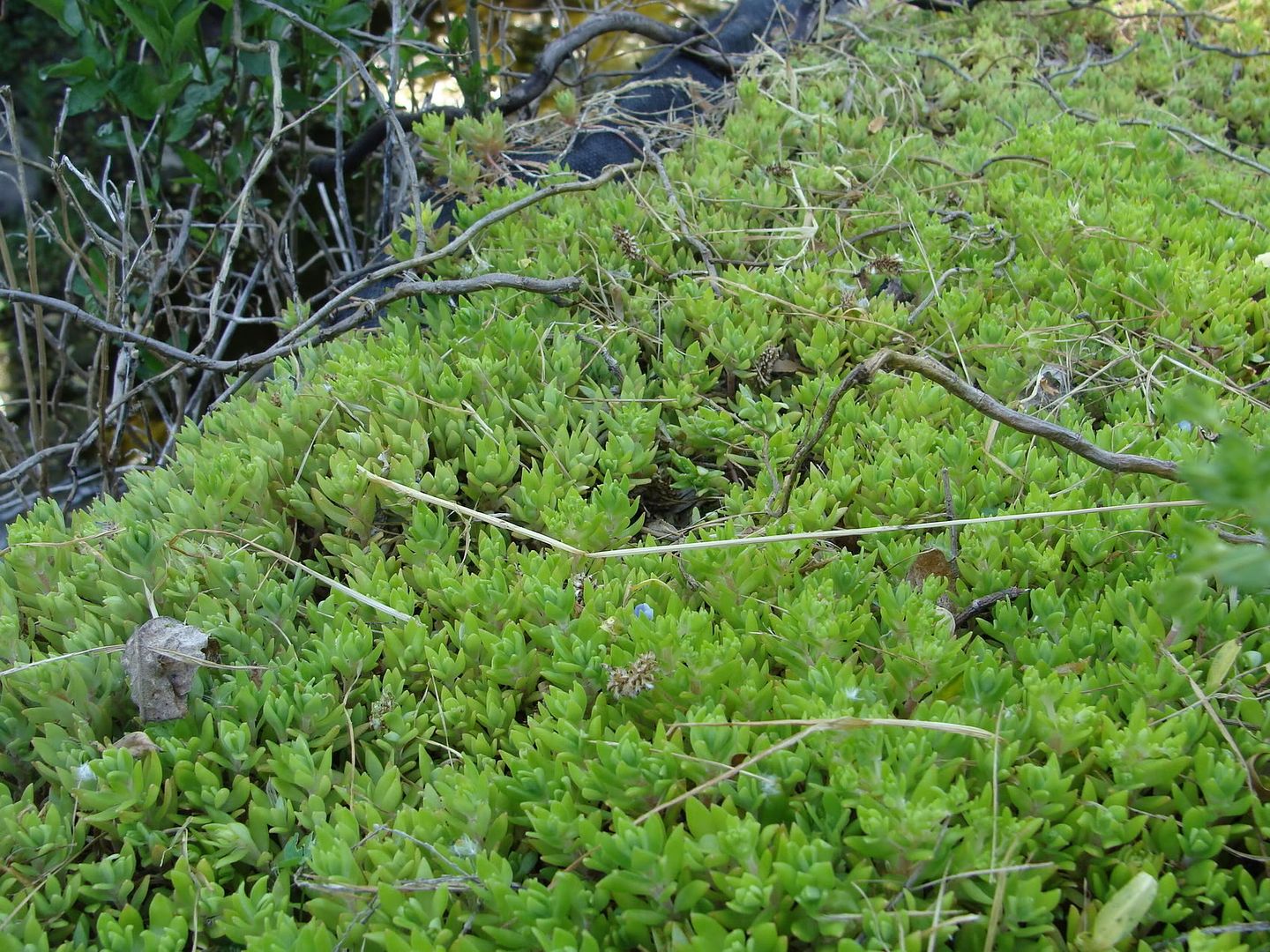
Sedum succulent garden hardy succulents update with many new species
Here's the link to my sedum blog from 1 year ago. http://stevespeonygarden.blogspot.com/2011/05/sedum-succulent-garden-hardy-succulents.html
This year I have manually started to start spreading my sedums out, and actually cutting back on the original one since it keeps expanding. They are very hardy so zone 6a winters are usually never a problem especially since they grow so low to the ground and get covered by the snow. All of them made it through the winter except the Angelina, but I have re-acquired that species so it's OK.
Here's the original sedum that I started out with.
Sedum Sarmentosum
This year I have manually started to start spreading my sedums out, and actually cutting back on the original one since it keeps expanding. They are very hardy so zone 6a winters are usually never a problem especially since they grow so low to the ground and get covered by the snow. All of them made it through the winter except the Angelina, but I have re-acquired that species so it's OK.
Here's the original sedum that I started out with.
Sedum Sarmentosum
Tuesday, May 15, 2012
Air layering running bamboo shoots for small divisions
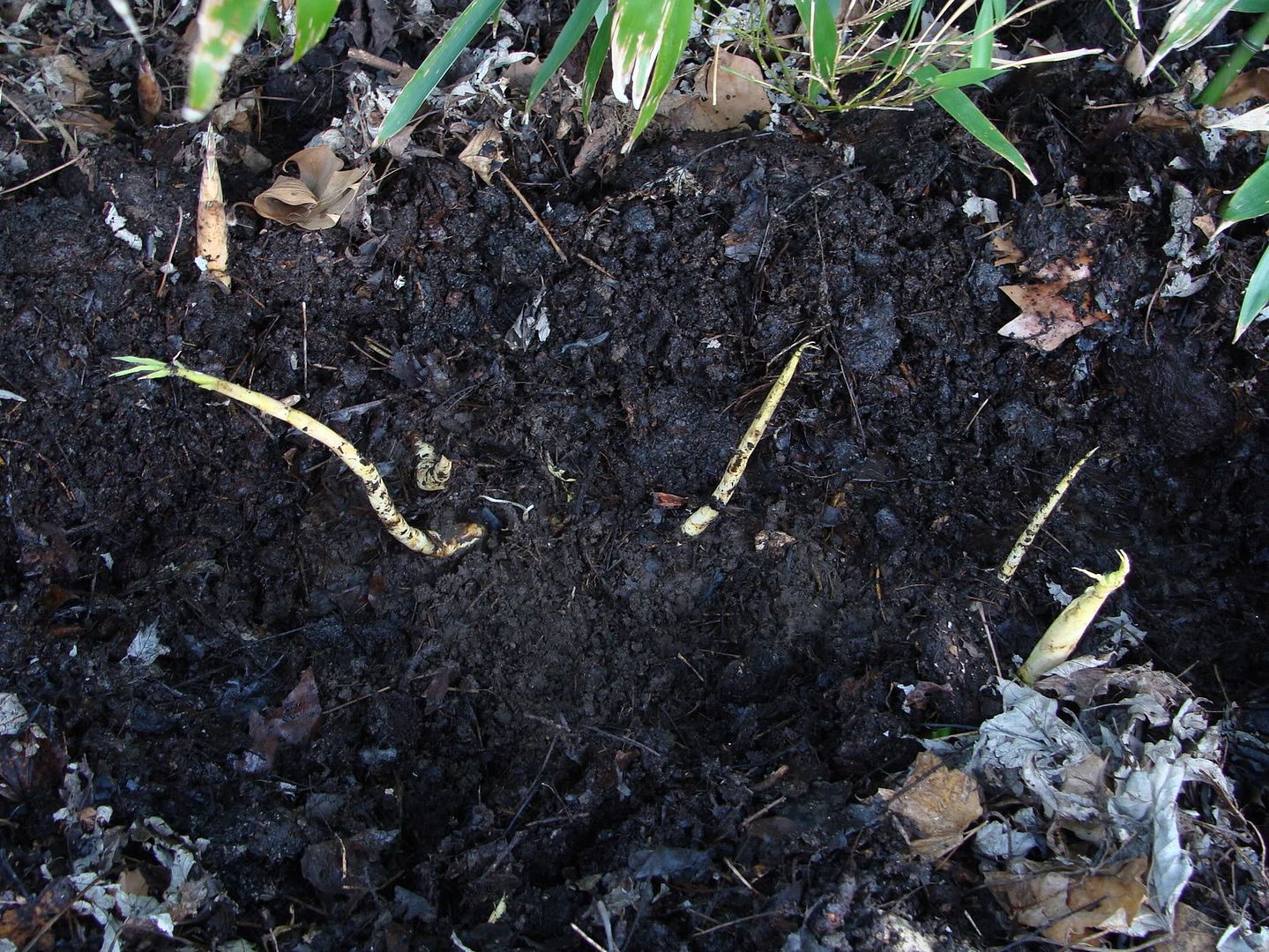
Last year, I did an experiment where I took a phyllostachys dulcis shoot that hasn't formed its anchor roots yet, and forced it through the drainage hole of a nursery pot, filling it up with soil. As expected, it turned out to be a viable division as 4 rhizomes grew out of the based of that shoot after it was severed from the mother plant.
The biggest problem was that the shoot that emerged was too big, and had too many anchor roots that dried up it's little 2 gallon put very quickly. Last year I grew a rhizome close to the surface on purpose in order to promote the formation of smaller shoots which are easier to work with, and I can get plenty of which will be less of a burden for the mother plant since they are so small. As expected, the mini-shoots formed. This propagation method can be used for running bamboos that have a hard time running, or juvenile bamboos where you want to turn small shoots into divisions without draining the energy of the mother plant too much. These are clearly true shoots because you don't always have whip shoots available in the spring.
I'll guess I can name this shoot bud activation, air layering propagation.
Here's the shoots that were downsized while the shoots on both ends of the same rhizome are full size.
The biggest problem was that the shoot that emerged was too big, and had too many anchor roots that dried up it's little 2 gallon put very quickly. Last year I grew a rhizome close to the surface on purpose in order to promote the formation of smaller shoots which are easier to work with, and I can get plenty of which will be less of a burden for the mother plant since they are so small. As expected, the mini-shoots formed. This propagation method can be used for running bamboos that have a hard time running, or juvenile bamboos where you want to turn small shoots into divisions without draining the energy of the mother plant too much. These are clearly true shoots because you don't always have whip shoots available in the spring.
I'll guess I can name this shoot bud activation, air layering propagation.
Here's the shoots that were downsized while the shoots on both ends of the same rhizome are full size.
Labels:
air layer,
anchor roots,
bamboo division,
cloning,
culm,
dividing,
dwarfing,
leaves,
little,
mini micropropagation,
rhizomes,
rooting gel,
sheaths,
shoot buds,
small,
splitting,
spreading,
tiny boo,
viability
Subscribe to:
Posts (Atom)